
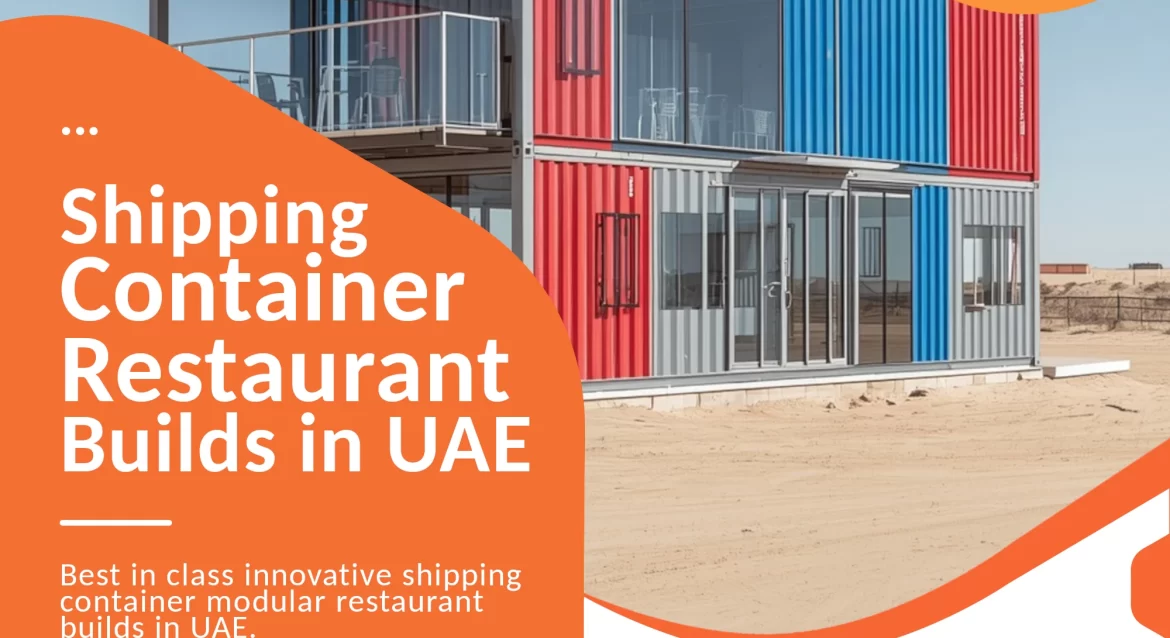
The UAE’s vibrant F&B scene is being reshaped by innovative shipping container restaurants. These modular designs offer chefs and entrepreneurs a unique blend of flexibility, speed, and sustainable appeal, creating memorable dining destinations that stand out in a competitive and design-conscious market.
Table of Contents
1. Embracing the New Wave of Modular Gastronomy
The UAE’s culinary landscape, known for its luxury and constant innovation, is experiencing a dynamic shift as restaurateurs seek to break free from the high costs and rigid constraints of traditional brick-and-mortar venues. This has ignited a powerful trend towards modular gastronomy, where shipping container conversions offer a compelling pathway to launch distinctive, agile, and financially savvy dining concepts. A Shipping container Restaurant UAE is more than a pop-up; it is a fully-realized culinary brand housed within an engineered, climate-controlled environment that can be as permanent or mobile as the business strategy demands. By partnering with a specialist like Arabian Containers, a leading container Restaurant conversion company, chefs gain the freedom to realize highly thematic designs—from a sleek, futuristic sushi bar to a rustic, farm-to-table eatery—without the prohibitive overhead of conventional construction. This approach aligns perfectly with the experimental spirit of the UAE’s food scene, allowing for bold concepts to be tested in prime locations with lower risk, and for successful brands to scale or relocate with remarkable ease. The inherent narrative of sustainability and clever reuse also resonates deeply with a growing segment of eco-conscious diners, adding a layer of brand authenticity that is highly marketable. Arabian Containers leverages its expertise not just in container modification, but in creating functional art, transforming steel boxes into immersive dining experiences that captivate from the curb. For entrepreneurs, this model dramatically compresses the timeline from concept to service, turning capital into revenue-generating assets far quicker than traditional builds. Ultimately, this new wave represents a fundamental rethinking of restaurant infrastructure, where the building itself becomes a key ingredient in the recipe for success, offering flexibility, character, and smart economics in one innovative package.
2. Mastering the Exterior: Creating Curb Appeal and Brand Identity
In the visually saturated urban environments of Dubai and Abu Dhabi, a restaurant’s exterior is its first and most crucial marketing tool, tasked with stopping foot traffic and instantly communicating its brand ethos. A shipping container Restaurant conversion offers a unique architectural canvas for creating jaw-dropping curb appeal that diverges dramatically from the glass and marble facades of traditional establishments. Innovative designs might involve angular cuts and cantilevers that defy the boxy shape, expansive floor-to-ceiling glass walls that showcase the vibrant interior life, or the strategic stacking and arrangement of multiple containers to create dynamic, multi-level dining terraces with panoramic views. Arabian Containers works closely with clients to select exterior materials that tell a story: weathered Corten steel for an industrial heritage feel, sleek composite panels for a futuristic aesthetic, or rich timber cladding to evoke warmth and organic connection. Integrated lighting is paramount; strategic LED strips, illuminated signage, and feature spotlights can transform the structure into a glowing beacon at night, ensuring it remains a destination after dark. Landscaping and outdoor dining areas are designed as seamless extensions, using decking, pergolas, and native planting to soften the industrial edges and create inviting alfresco spaces that capitalize on the UAE’s cooler months. As a visionary Modular Restaurant builder in UAE, Arabian Containers ensures that every design choice, from the bold color of the container to the style of the entrance canopy, is a deliberate component of the brand’s visual identity. This mastery of exterior design doesn’t just attract customers; it generates invaluable organic marketing, as diners are compelled to photograph and share the striking architecture on social media. The exterior becomes a silent ambassador, promising a unique experience within and setting the stage for the culinary journey ahead, making it an essential first chapter in the restaurant’s story.
3. Engineering the Heart: The High-Performance Container Kitchen
The true test of any innovative restaurant design lies in its kitchen—a space that must marry uncompromising functionality, strict health and safety codes, and efficient workflow within a compact footprint, a challenge expertly met through precision container fabrication. Designing a commercial kitchen inside a shipping container requires meticulous planning, where every centimeter is optimized for a specific piece of equipment and every utility connection is mapped with surgical precision. Arabian Containers begins this process by collaborating with chefs and kitchen consultants to design a layout that supports the specific menu, whether it requires a massive charcoal grill, a bank of high-output induction cooktops, a dedicated pastry station, or a full sushi preparation bar. Critical systems are then engineered during the container modification phase: heavy-duty electrical circuits to power all equipment, specialized plumbing for a triple-sink station, a dedicated water line for the espresso machine, and robust gas lines, all installed to meet the stringent codes of the UAE’s food safety authorities. Ventilation is the most critical system; a powerful, externally-ducted extraction hood with a high CFM rating is custom-fitted to remove heat, grease, and odors, complemented by a makeup air system to balance pressure and maintain comfort. The entire kitchen pod is insulated with high-temperature, fire-rated materials to contain heat and ensure energy efficiency, while floors are finished with non-slip, chemical-resistant epoxy for safety and easy cleaning. As a premier prefab Restaurant construction company in UAE, Arabian Containers builds these kitchens in a controlled factory setting, allowing for perfect alignment of equipment, easier compliance inspections, and a significantly faster on-site installation. This off-site fabrication means the heart of the restaurant arrives nearly ready to beat, requiring only final utility hookups, allowing the business to move swiftly through commissioning and into soft-opening phases. A well-engineered container kitchen from Arabian Containers provides chefs with a professional, reliable, and safe environment to execute their culinary vision at the highest level, proving that innovation in form does not require compromise on function.
4. Crafting Immersive Interior Ambiance and Customer Flow
Once guests step inside, the interior design must immediately envelop them in an ambiance that supports the culinary theme and ensures a comfortable, memorable journey from entrance to exit. The spatial planning within a shipping container restaurant is a masterclass in illusion and efficiency, using design techniques to make the space feel expansive and intentional rather than confined. Arabian Containers’ design team employs strategies like mirrored accent walls, strategic sightlines to outdoor views, and varying ceiling heights created through container modification to add visual depth and dimension. The material palette is carefully curated to stimulate the senses: warm woods and soft textiles for a cozy bistro, polished concrete and exposed steel for an urban grill, or vibrant tiles and lush greenery for a tropical café. Lighting is layered with purpose; ambient lighting sets the overall mood, task lighting illuminates tables for menu reading, and accent lighting highlights artwork or architectural features, all controlled by dimmable systems to transition from day to evening service. The customer flow is choreographed to feel natural, with a clear welcoming zone, a visually accessible point of sale or host stand, a logical path to seating, and discreet access to restrooms, all while maintaining efficient service corridors for staff. Furniture is selected not only for style but for flexibility; modular seating allows the layout to adapt from intimate dinners to large group gatherings, and foldable elements can maximize space during off-peak hours. Acoustic design is also integral; sound-absorbing panels or fabrics are incorporated to manage the reverberation common in hard-surfaced containers, ensuring conversation is comfortable and the atmosphere remains lively, not chaotic. As an expert in Modular Restaurant conversion in UAE, Arabian Containers understands that the interior environment is a key ingredient in the overall dining experience, directly influencing dwell time, perceived value, and the likelihood of return visits. A successfully crafted interior tells a cohesive story where every touchpoint, from the chair you sit in to the artwork on the wall, reinforces the brand and enhances the enjoyment of the meal, turning a simple dinner into a holistic experience.
5. Integrating Technology for Operational Excellence and Engagement
In the UAE’s tech-forward dining scene, a successful restaurant must seamlessly integrate technology to streamline operations, enhance guest experience, and gather valuable data, all of which can be embedded into a container conversion from its inception. During the container fabrication phase, Arabian Containers pre-wires the structure for robust, high-speed internet and installs a centralized cable management system, providing the digital backbone for all point-of-sale (POS) systems, kitchen display screens, and customer Wi-Fi. This allows for the implementation of cloud-based POS platforms that integrate table management, payment processing, and inventory tracking in real-time, giving owners critical operational visibility from day one. For the guest experience, technology can be subtly woven in: digital menu boards that can be updated instantly, QR codes at tables for contactless menus and payment, or even tablet-based ordering systems that streamline service and reduce wait times. More immersive integrations might include ambient lighting systems controlled by smart apps to change the mood with the time of day, or dedicated infrastructure for high-quality sound systems that support curated playlists or live acoustic performances. For kitchen management, the integration of smart energy monitors and equipment with IoT connectivity can help optimize utility use, a significant cost in the region, contributing to both profitability and sustainability goals. Arabian Containers, as an innovative shipping container conversion company in UAE, designs with future tech in mind, ensuring conduit space is available for upgrades like tableside ordering tablets or integrated charging stations. This embedded technological layer not only improves efficiency and reduces staffing friction but also provides a data-driven foundation for understanding customer preferences, peak times, and popular menu items, enabling smarter business decisions. A restaurant that operates with this level of integrated intelligence projects a modern, efficient image, appealing to a clientele that expects convenience and sophistication as part of their dining experience.
6. Designing for Climate Resilience and Year-Round Comfort
The single greatest engineering challenge for any outdoor structure in the UAE is defeating the extreme climate, and for a restaurant where guest comfort is paramount, achieving a perfect interior environment is non-negotiable for commercial success. A professional shipping container Restaurant conversion must begin with a defense-in-depth approach to thermal management, starting with the application of high-performance, closed-cell spray foam insulation to all interior surfaces during the container modification process. This creates a continuous thermal and vapor barrier that minimizes heat transfer and prevents condensation, forming a stable shell that is the first line of defense against the external desert heat. Arabian Containers then engineers a powerful, precisely sized HVAC system capable of rapid cooling and maintaining a consistent, comfortable humidity level despite the constant opening of doors and the internal heat load from kitchens and guests. This is complemented by advanced glazing solutions—such as double-paned, low-emissivity glass for any large windows—which allow for natural light and views while reflecting solar radiant heat. For outdoor dining areas, which are essential for revenue, integrated solutions like misting cooling systems, high-velocity overhead fans, and retractable shading structures are designed to extend the usability of terraces through more months of the year. The entire design also considers air quality, incorporating high-grade filtration into the HVAC to ensure a dust-free interior environment, a detail greatly appreciated by patrons. As a climate-savvy prefab Restaurant construction company in UAE, Arabian Containers selects all exterior finishes and roofing materials for their reflective properties and UV resistance to further reduce thermal gain. This comprehensive climate-control engineering transforms the steel container from a potential oven into a cool, dry, and consistently comfortable oasis, ensuring that diners remain focused on their meals and company, not on the temperature, regardless of the season outside. This relentless focus on comfort is a critical, often unseen, factor that directly impacts customer satisfaction, repeat business, and ultimately, the restaurant’s longevity and reputation.
7. Maximizing Space with Multi-Level and Hybrid Configurations
To overcome the inherent spatial limitations of a single container and to create a truly standout architectural statement, innovative designs often employ multi-level stacking or hybrid configurations that combine containers with other structural elements. This approach can dramatically increase square footage, create dynamic interior volumes, and offer guests varied dining experiences within one venue. A popular design involves stacking two 40-foot containers, with the lower level housing the kitchen, storage, and restrooms, and the upper level dedicated to a climate-controlled dining area with elevated views, connected by an internal or external staircase that becomes a feature in itself. Alternatively, containers can be arranged in an L-shape or U-shape around a central courtyard or terrace, creating a private, immersive dining enclave that feels secluded from the surrounding city. Arabian Containers excels in the complex engineering required for these projects, reinforcing structures for safe stacking, creating large open-plan spaces by removing entire wall sections and installing supporting steel beams, and ensuring all connections are seamless and weatherproof. Hybrid designs might pair a container kitchen with a lightweight, tensile fabric structure for a shaded dining area, or connect several containers to a traditionally built central bar and reception hub. These configurations allow for creative zoning—perhaps a lively ground-floor bar in one container, an intimate fine-dining space in another, and a rooftop shisha lounge on top—catering to multiple customer segments day and night. As a pioneering Modular Restaurant builder in UAE, Arabian Containers turns spatial constraints into architectural opportunities, designing spaces that surprise and delight guests who move through different levels and zones. This not only maximizes the revenue-generating potential of a given plot of land but also enhances the narrative of the restaurant, making the exploration of the space part of the dining adventure. A multi-level container restaurant becomes a landmark, its distinctive silhouette breaking the skyline and inviting curiosity, proving that modular design can achieve sophistication and scale on par with any traditional build.
8. Navigating Regulatory Compliance and Efficient Permitting
The innovative nature of a container restaurant must be matched by a rigorous and knowledgeable approach to local regulations, as obtaining the necessary permits is a critical step that can make or break a project timeline in the UAE. The process involves multiple authorities, including the Department of Economic Development (for the trade license), the relevant Municipality (Dubai, Abu Dhabi, etc.) for building and location permits, and the Food Safety Department for the crucial hygiene and operational certificates. A container Restaurant conversion presents unique considerations, as officials must be assured that the modular structure meets all building codes for fire safety, structural integrity, electrical wiring, and plumbing, especially for a high-occupancy, public-facing business. This is where the proven expertise of a company like Arabian Containers, an experienced container conversion company in UAE, becomes invaluable; they have a deep understanding of the specific documentation, engineering reports, and inspections required to demonstrate compliance for a non-traditional build. Their team can manage the entire permit application process, submitting detailed architectural drawings, structural calculations from certified engineers, and specifications for all materials and fire suppression systems installed during container fabrication. They also navigate the specific requirements for utility connections, waste management plans, and accessibility features, ensuring no detail is overlooked. By having a partner who speaks the language of both innovative design and regulatory compliance, restaurateurs can avoid costly delays, revisions, and frustrations, streamlining the path to opening day. Arabian Containers’ established relationships and track record with local authorities provide a level of confidence and efficiency that is difficult to achieve independently, especially for first-time operators. A smooth, well-managed permitting process not only saves time and money but also ensures the restaurant is built to the highest standards of safety and legality, protecting the investment and the patrons from the outset.
Innovative shipping container restaurant designs are redefining the F&B landscape in the UAE, offering a powerful formula of distinctive aesthetics, operational agility, and sustainable appeal. They provide a viable, creative, and smart alternative for entrepreneurs looking to make a memorable mark in a competitive industry. Arabian Containers stands as the essential partner in this culinary revolution, providing the engineering prowess, design vision, and regulatory knowledge to transform a modular concept into a stunning, fully-functional, and compliant dining destination. Their end-to-end service ensures that innovation is matched by quality, safety, and commercial viability at every step. To start designing your own groundbreaking container restaurant, contact Arabian Containers today. Their expert team is ready to collaborate and cook up a spectacular success story for your brand in the UAE market.